There are certain smells that just belong in an automotive shop. We are completely used to the scent of fresh motor oil, the sweet aroma of engine coolant, and the metallic tang of new brake rotors. But there is one very specific smell that should never, under any circumstances, make an appearance inside the passenger cabin of your personal vehicle: the sharp, unmistakable odor of raw gasoline.
When you are sitting behind the wheel, your cabin is supposed to be a sealed sanctuary protecting you from the elements outside. If you suddenly turn the key or sit at a red light and notice a strong waft of gas fumes filling the interior, it can instantly trigger a wave of panic. At our shop, we treat a gasoline odor inside the cabin as an absolute priority. Gasoline is a highly volatile, combustible liquid, and its vapors are incredibly toxic to breathe in a confined space. Today, we want to look at the most common reasons your car might smell like a gas pump, explain how the fumes sneak into your vents, and discuss what you should do to stay safe.
The Immediate First Step
Before we even talk about brackets, hoses, or computer sensors, we need to establish a vital safety rule. If the smell of raw gasoline inside your cabin is strong enough to give you a headache or makes your eyes water, you need to safely pull over, turn off the engine, and exit the vehicle.
Do not try to make it home, and do not ignore it with the windows rolled down. Fumes mean that raw fuel or vapor is escaping somewhere close to a hot engine or exhaust pipe, creating an immediate fire hazard. It is always best to err on the side of caution and have the vehicle towed to a professional garage.
The Common Culprits
When our technicians trace a fuel odor, they follow a path from the fuel tank all the way up to the fuel injectors under the hood. Here are the most frequent reasons the smell invades your space:
A Loose or Damaged Gas Cap: Let us start with the simplest and cheapest fix. Your gas cap does much more than just keep rain out of your tank. It is a critical sealing component of your vehicle's emissions system. If the internal rubber gasket on the cap cracks, or if you simply forgot to click it tight during your last fill-up, fuel vapors will escape from the filler neck. The wind can easily carry these fumes straight into your car's climate control intake vents.
Leaking Fuel Injector Seals: Your fuel injectors are mounted directly into the hot engine block, sealed tightly by tiny rubber O-rings. Because these O-rings are subjected to constant thermal cycles and intense pressure, the rubber eventually hardens, cracks, and splits. When this happens, a tiny amount of raw fuel will seep out onto the hot engine, vaporizing instantly and sending powerful gas smells directly through the firewall and into your dashboard vents.
Damaged Fuel Lines or Hoses: The fuel pump inside your tank sends gasoline to the engine through a series of metal lines and flexible rubber hoses running underneath the body of your car. Road debris, winter salt rust, or simple old age can cause these lines to develop pinhole leaks. Because these lines operate under immense pressure, even a microscopic hole can spray a fine mist of fuel that creates a massive odor.
EVAP System Failures: Modern cars utilize an Evaporative Emission Control (EVAP) system to trap and reuse fuel vapors before they can escape into the atmosphere. This system relies on a charcoal canister, purge valves, and plastic vent lines. If the charcoal canister cracks or a purge valve gets stuck open, raw fuel vapors will vent directly under the vehicle, quickly seeping into the interior cabin.
How the Fumes Sneak into Your Vents
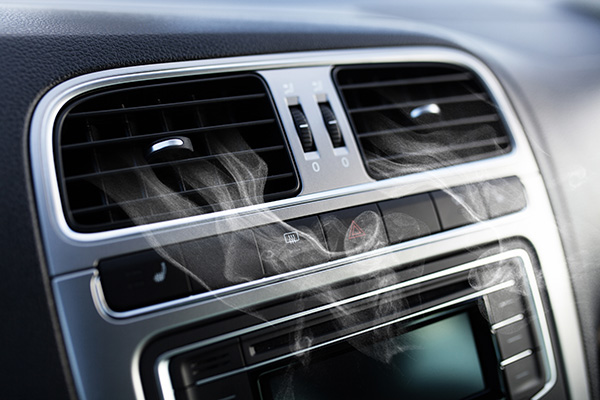
A lot of drivers ask us how a leak outside the car manages to smell so strong inside the cabin. Your vehicle's heating, ventilation, and air conditioning system pulls fresh air from the exterior cowl area, which sits right at the base of your windshield, directly adjacent to the engine bay.
If you have a tiny fuel leak under the hood, the rising vapors naturally pool right below the windshield wipers. The moment you turn on your fan or your defroster, the system acts like a vacuum, sucking those raw gasoline fumes directly into your face.
Let Us Track Down the Leak Safely
Hunting down a fuel leak requires a methodical approach, specialized safety equipment, and a trained eye. When you bring your vehicle to our shop, our technicians utilize electronic fuel vapor sniffers and advanced smoke machines to pressurize the system safely.
We will verify the integrity of your fuel lines, test your injector seals, check your EVAP components, and ensure your fuel delivery system is completely sealed and safe. Stop by Complete Automotive Repair Specialists in Cromwell, CT or book your comprehensive fuel system inspection online today.