Getting a notice in the mail that your car is due for emissions can feel like one more chore on a busy calendar. But in Connecticut, skipping that test can cost you late fees, registration problems, and a lot of stress you do not need. Once you understand how the program works and what inspectors look for, it becomes a quick, predictable stop instead of a mystery.
What CT Emissions Testing Is Trying To Do
Connecticut’s emissions program is all about cleaning up the air without making life harder than it has to be for drivers. Your car’s exhaust is checked to ensure the engine and emission controls are functioning well enough to keep pollution within the state's set limits.
For most modern vehicles, the test is really a check of how well your onboard computer and sensors manage fuel, spark, and exhaust gases. If everything is healthy, the test feels like a short visit where your car is plugged into a machine, and the results show as a pass, and you are back on the road in a few minutes.
Which Vehicles Have To Test (And Which Are Exempt)
Not every vehicle in Connecticut goes through emissions. In simple terms, most everyday gasoline passenger cars and light trucks that are a few years old but not yet “classic” age will be called in. Very new vehicles, some older ones, some heavy-duty vehicles, and motorcycles are usually outside the program.
Electric vehicles, some specialty vehicles, and certain very old or very heavy vehicles fall into special categories as well. The exact list changes occasionally, which is why it pays to read the DMV notice carefully rather than assuming your vehicle is exempt. If you buy a used car that is already registered in CT, the state keeps the existing schedule, so your test due date may be sooner than you expect.
How Often You Have To Go For A Test
For most gasoline passenger vehicles that are subject to the program, Connecticut uses a regular cycle, so your car is checked every so often instead of randomly. Once your car is old enough to join the program, it will be tested on that repeating schedule as long as it stays registered in the state.
If you move to Connecticut, your vehicle will typically need to be tested to enter the CT system, unless it clearly falls into an exempt category. A common surprise we see is people who think a recent out-of-state test follows the car. Connecticut still wants your vehicle tested under its own rules and equipment.
What Happens During A CT Emissions Test
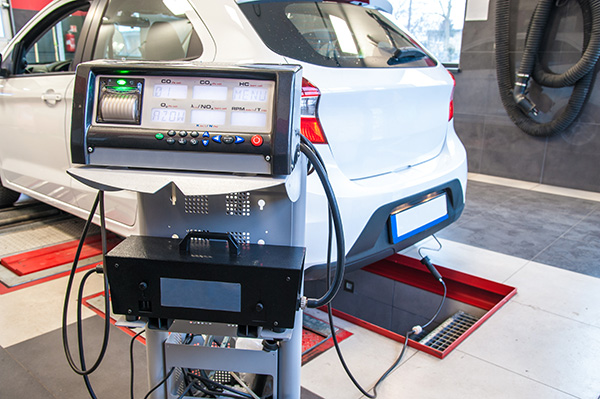
For newer vehicles, the main part of the test is an OBD (onboard diagnostics) check. The inspector connects a scan tool to your car’s diagnostic port, reads stored trouble codes, checks that all the required emissions monitors are complete, and confirms there are no active faults tied to emissions.
On some vehicles, there may also be a quick visual check for missing or clearly tampered-with emission components, and in certain cases a tailpipe test or gas cap check. The whole process is designed to be fast. If you pull in with a warmed-up engine and no warning lights, you are usually in and out much faster than a full repair visit.
Common Reasons Cars Fail CT Emissions
Most failures trace back to a handful of issues that show up again and again. Some of the most common are:
- Check engine light on for anything related to the emissions system
- Recently cleared codes or dead battery, which leave monitors “not ready”
- Misfires, rich or lean fuel mixture problems, or bad oxygen sensors
- Obvious missing or modified emission components on older vehicles
From what we see in the bay, a lot of people wait until the test notice shows up, then remember the light that has been on for months. If that light is on for an emissions-related reason, the car is very likely to fail until that underlying problem is corrected.
Simple Ways To Get Ready So You Pass The First Time
You can tilt the odds in your favor with a few easy steps. Make sure the check engine light is not on and has not just been reset. If a shop recently cleared codes or you just replaced a battery, put some normal mixed driving on the car before your appointment so the monitors have time to run and complete.
Arrive with the engine warmed up, not straight from a cold start after sitting all day. A warmed-up engine and catalytic converter generally run cleaner and are more likely to have all readiness monitors in the “complete” column. If you already suspect a problem, having us look at it before your test date is usually cheaper than failing, repairing in a rush, and coming back a second time.
What Happens If You Fail Or Miss Your Test Date
Failing an emissions test does not mean your car is “done,” but it does start the clock. You will get a printout showing why the car failed and what systems need attention. From there, a repair visit is the next step. Once the issue is fixed, the vehicle goes back for a retest. In many cases, if the retest is done within the allowed window, there is no extra fee beyond the original test.
Ignoring the notice entirely, or missing the test deadline, can lead to late fees and problems renewing or maintaining your registration. At that point, you are dealing with both a mechanical issue and a paperwork headache. Our technicians see how stressful that can be, which is why we always recommend treating the first notice as your chance to stay ahead of the curve.
Get CT Emissions Test Prep in Cromwell, CT with Complete Automotive Repair Specialists
If your Connecticut emissions notice just arrived, or your car has a check engine light and a test date coming up, a little prep now can make the visit much easier. We can scan your vehicle, check readiness monitors, repair any issues that would cause a failure, and help you go into the test with confidence.
Schedule emissions test inspection in Cromwell, CT with Complete Automotive Repair Specialists, and we will help you pass cleanly and keep your registration on track.