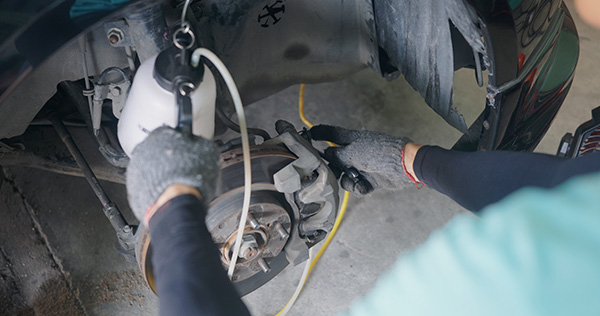
Brake fluid spends its entire service life dealing with pressure, heat, moisture, and movement through small hydraulic passages. It can keep doing its job for years without giving the driver an obvious warning that its condition has changed.
Once the fluid becomes contaminated, it can no longer protect the brake system as well as fresh fluid. The cause is not always simple dirt. Water, corrosion, degraded rubber, incorrect fluids, and age can all change what is circulating through the lines, calipers, master cylinder, and ABS components.
How Moisture Gets Into Brake Fluid
Most common brake fluids absorb moisture from their surroundings. The hydraulic system is closed, but moisture can still enter slowly through seals, hoses, reservoir venting, and normal service exposure. Humid conditions can speed up that process.
As the water content rises, the fluid's boiling point drops. Heavy traffic, repeated braking, steep roads, towing, or a series of hard stops can create enough heat to expose fluid that has already absorbed too much moisture. If vapor develops in the system, the brake pedal can begin to feel softer or travel farther than expected.
Heat and Age Change the Fluid
Brake fluid does not stay chemically identical forever. Repeated heating and cooling cycles gradually break down its protective additives. The fluid can darken, lose some heat resistance, and collect material produced by normal wear inside hydraulic components.
A vehicle does not need to be driven aggressively for this to happen. Time alone plays a role, which is why a low-mileage car can still have old brake fluid. Regular maintenance should account for both mileage and age, rather than assuming lightly driven vehicles never need fluid service.
Corrosion and Internal Wear Add Contamination
Moisture inside the brake system can encourage corrosion in metal lines, calipers, wheel cylinders, master cylinders, and ABS hydraulic units. Tiny particles from that corrosion can mix with the fluid and circulate through narrow passages and valves.
Rubber seals and hoses also age. As components wear, small amounts of degraded material can enter the fluid. Dark or dirty fluid can be one clue that contamination is building, but appearance does not reveal every problem inside the system.
Incorrect Fluid Can Cause Serious Trouble
Brake systems are designed for specific fluid types, and using the wrong product can cause problems quickly. Petroleum-based fluids such as engine oil or power steering fluid can damage rubber seals in systems designed for DOT brake fluid.
Even mixing incompatible brake fluid types can create performance or material concerns on some vehicles. If you have any questions about what was added to the reservoir, the system needs an inspection before you add more fluid. Severe contamination can require more than a standard flush if seals or hydraulic parts have already been damaged.
How To Tell If Brake Fluid Is Contaminated
Very dark, cloudy, or dirty fluid deserves attention, but color should not be the only test. Fluid can look acceptable while holding excessive moisture, especially if nobody knows when it was last replaced. Testing and service history give a better picture.
Pedal changes can provide another clue. A pedal that becomes soft after repeated braking, feels less consistent when hot, or travels farther than before needs to be checked. Those symptoms can also come from air, leaks, hoses, calipers, or master cylinder problems, so contaminated fluid should never be assumed to be the only cause.
When a Brake Fluid Flush Is Needed
A brake fluid flush makes sense when testing shows excessive moisture, the fluid is heavily discolored or contaminated, the manufacturer recommends service, or the service history is unknown. Fluid replacement can also be appropriate after hydraulic repairs involving components such as calipers, brake hoses, wheel cylinders, or the master cylinder.
A proper flush removes old fluid from the hydraulic system and replaces it with the correct fresh fluid. Topping off the reservoir is different because old fluid remains throughout the lines, calipers, and ABS unit. The entire brake system should be checked at the same time so leaks, worn pads, sticking components, or other problems are not hidden by fresh fluid.
Get Brake Fluid Flush Service In Cromwell, CT, With Complete Automotive Repair Specialists
If your brake fluid is dark, contaminated, overdue, or its service history is unclear, Complete Automotive Repair Specialists in Cromwell, CT, can check the fluid condition and the rest of the braking system.
Schedule a brake fluid flush when it is due and give the hydraulic components fresh fluid that can handle the heat and pressure they face every day.