A car that will not start has a way of shrinking the whole day. Suddenly the plan is not work, school, errands, or dinner. It is the sound the car made when you turned the key.
Click. Slow crank. Nothing. Maybe the lights came on, but the engine did not.
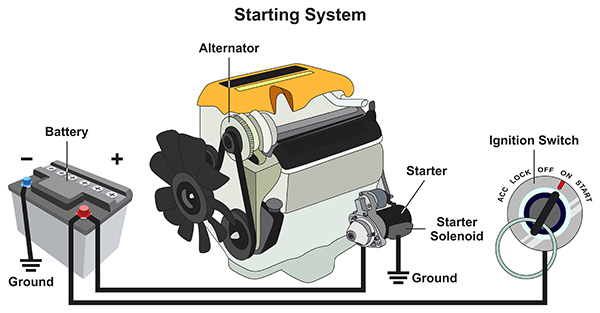
Those details matter because a starting problem can point to the battery, alternator, starter, fuel system, ignition system, wiring, or even a small safety switch. Here are the questions drivers ask most often when the car refuses to wake up.
1. Is It Always The Battery?
No, but the battery is a common place to start. A weak battery can light up the dashboard and still not have enough power to crank the engine. That is why drivers sometimes get confused. The radio works, the lights turn on, but the starter will not move the engine.
Slow cranking, rapid clicking, dim interior lights, or needing a jump are all signs of a weak battery. The battery still needs to be tested under load. A simple voltage check does not always tell the whole story.
2. What Does Rapid Clicking Mean?
Rapid clicking usually means the starter is trying to work, but it is not getting enough power. A weak battery, corroded terminals, loose cables, or a poor ground can all cause that sound.
The click itself is only the clue. We check the battery condition, cable ends, terminal tightness, and voltage drop before calling a part bad. A dirty connection can make a good battery act weak.
3. What If I Hear One Loud Click?
One solid click can point more toward a starter problem, especially if the battery is fully charged. The starter may be sticking, worn, or not engaging correctly.
That said, low voltage can still create a single-click symptom. So it can be bad cables or a failing starter relay. The repair should be based on testing, not only the sound.
4. Why Does The Car Start With A Jump And Then Die Later?
If a jump start gets the engine running, but the car dies again or will not restart later, the charging system needs attention. The alternator may not be charging the battery while the engine is running.
A loose belt, a weak alternator, a bad connection, or a charging system fault can all leave the battery drained again. Replacing the battery alone may only buy time if the alternator is the real problem.
5. Can The Alternator Keep My Car From Starting?
Yes. The alternator does not crank the engine directly, but it keeps the battery charged. If the alternator stops charging, the battery slowly loses power until there is not enough left to start the engine.
Watch for dim lights, a battery warning light while driving, weak accessories, or several warning lights appearing at once. Those signs often show up before the vehicle refuses to start.
6. How Do I Know If The Starter Is Bad?
A bad starter may cause one click, no crank, grinding, or a starting problem that comes and goes. Some starters act worse when hot. The car may start in the morning, then refuse after a quick stop at the store.
One of our technicians checks the power and ground at the starter, starter draw, relays, and cable condition. A starter should not be replaced until the rest of the circuit checks out.
7. Could It Be The Key Or Security System?
Yes. If the vehicle does not recognize the key, it may not crank or may crank and then shut off. A weak key fob battery, a damaged key, a security system fault, or an ignition switch issue can all cause starting trouble.
A flashing security light on the dashboard is a useful clue. Tell the shop if the problem started after dropping the key, changing a fob battery, or using a spare key.
8. What If The Engine Cranks But Does Not Start?
Cranking means the starter is turning the engine. If the engine turns but never catches, the problem is likely not the starter. The vehicle may be missing fuel, spark, compression, or the correct sensor signal.
A bad fuel pump, crank sensor, ignition problem, blown fuse, timing issue, or empty fuel tank can all cause this kind of starting problem. This is where an inspection should follow the symptom rather than start with the battery.
9. Can Regular Maintenance Prevent Starting Problems?
It can prevent some of them. Battery testing, terminal cleaning, belt checks, fuel system checks, spark plug service, and charging system testing all help catch weak spots early.
Regular maintenance will not stop every failure, but it can catch the slow ones before they leave you stuck. A battery that tests weak today is easier to handle than one that quits in a parking lot tomorrow.
10. When Should I Tow Instead Of Keep Trying?
If the engine cranks unusually fast, makes grinding noises, smells like fuel, shows an oil or temperature warning, or keeps failing after repeated attempts, stop trying. Repeated cranking can drain the battery, overheat the starter, or flood the engine on some vehicles.
If the car is in an unsafe spot, move it only if you can do so safely. Otherwise, a tow is usually cheaper than creating a second problem while trying to force it to start.
Get Starting Problem Diagnostics In Cromwell, CT, With Complete Automotive Repair Specialists
If your car clicks, cranks slowly, starts only with a jump, or will not start at all, Complete Automotive Repair Specialists in Cromwell, CT, can test the battery, alternator, starter, wiring, fuel, and ignition systems.
Schedule a visit and find out what is actually keeping your vehicle from starting.