Loose steering can mess with your confidence fast. One day, it feels slightly vague, and the next, you’re making constant little corrections just to stay centered. It’s the kind of change that makes you turn the radio down and pay attention to every ripple in the road.
The frustrating part is that wobbles can come from a few different places. Some are simple, like tire issues. Others point to steering or suspension wear that should be handled sooner rather than later.
Why Loose Steering Feels Worse at Speed
At lower speeds, your hands can cover up small problems. The steering wheel might have a little extra play, but you’re not asking much from the front end. At highway speed, the vehicle needs steady tire contact and tight steering control to track straight.
If something is worn, the tire can start steering itself a bit over grooves, patches, or crosswinds. That’s when drivers describe it as wandering or feeling light in the wheel. The faster you go, the more those tiny movements stack up into a bigger, more uncomfortable feeling.
What Changes First, Then What Gets Worse
Loose steering usually follows a pattern. First, you notice the car does not hold a straight line as easily, especially on uneven pavement. Then the steering wheel may feel less precise, like there’s a delay between your input and the car’s response.
After that, you might feel a wobble during braking, or a shimmy that shows up right around a certain speed range. If it continues, tire wear often becomes the next clue, because loose parts and poor angles chew up tread in ways that do not fix themselves. We’ve seen plenty of cases where a minor steering issue turned into a tire problem because the early warning signs were ignored.
Common Causes of Wobbly Steering
Wobble can come from several components that all work together. The goal is to find what has excessive play, what is worn, and what is no longer holding alignment angles steady.
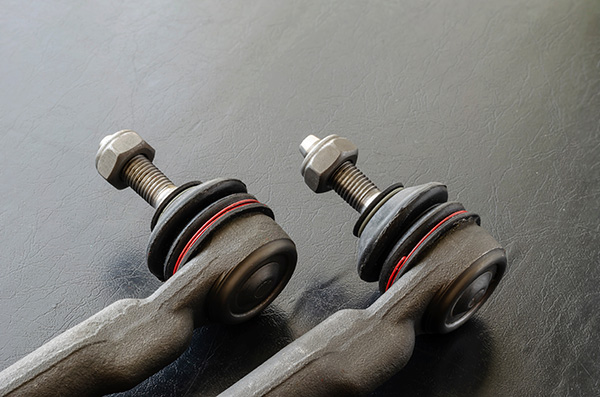
- Tie Rod Ends: These connect the steering system to the wheels. When they loosen, the car can wander and feel imprecise.
- Ball Joints: These let the wheel pivot while the suspension moves. Wear here can create clunks, uneven tire wear, and instability.
- Control Arm Bushings: Bushings hold the suspension in position while allowing controlled movement. When they crack or tear, the wheel can shift under load.
- Wheel Bearings: A worn bearing can add looseness and create a growl or rumble that changes with speed and turning.
- Steering Rack or Steering Shaft Components: Less common, but looseness here can feel like free play in the wheel or inconsistent response.
- Weak Shocks or Struts: These do not usually create play in the steering wheel, but they can let the front end bounce and lose composure over rough surfaces.
A good inspection checks these as a system, because one worn part often makes the whole front end feel worse than it really is.
How Tire Problems Mimic Steering Problems
Tires can make a healthy steering system feel sloppy. Uneven wear, low pressure, or a separated belt inside a tire can create wobble that feels like a steering issue. A tire that is out of balance can also cause a shake at specific speeds, which drivers sometimes describe as loose steering.
Pay attention to whether the wobble is tied to a speed range. If it shows up strongly at 55 to 70 mph and eases outside that range, balance or tire condition becomes more likely. If it changes mainly with braking or turning, steering and suspension wear becomes more likely.
Also, check for steering pull. A pull can come from alignment, tire construction, or brake drag. That is why a proper diagnosis looks at tires, brakes, and front-end components together.
Test-Drive Clues That Point to the Right Area
You do not need to diagnose it yourself, but noticing the pattern helps you explain the problem clearly and catch it early.
If the wobble gets worse when braking, think about front-end wear, warped brake rotors, or loose components that shift under braking force. If it shows up mainly on turns or feels worse when you load one side, ball joints, bearings, and bushings move higher on the list.
If the steering wheel has free play before the car responds, that often points to tie rods or steering linkage looseness. If the car feels unsettled over bumps and takes longer than expected to calm down afterward, worn shocks or struts may be part of the picture.
If you ever see a traction control or stability warning on the dashboard while the car also feels wobbly, treat it as a sign the vehicle is not behaving predictably. It does not always mean the system is bad, but it does mean you should get the chassis checked soon.
When It’s Safer to Park It and Call for Help
Some steering symptoms are annoying. Others are a safety concern. If the steering suddenly feels dramatically looser, or the vehicle starts pulling hard, do not keep pushing it.
It is time to stop driving and schedule service if you hear loud clunks during turns, feel the steering wheel jerking in your hands, or notice a wobble that is getting worse from trip to trip. Strong vibration combined with a pulling sensation can also mean a tire has internal damage, which should be addressed right away. Our technicians would rather see it early, even if it ends up being something simple, than after it escalates into a loss-of-control situation.
Get Steering and Suspension Service in Cromwell, CT, with Complete Automotive Repair Specialists
We can inspect your steering and suspension, check tire and wheel condition, and pinpoint what’s causing the looseness and wobble. We’ll explain what we find in plain language and recommend the repairs that actually restore stable, confident handling.
Call Complete Automotive Repair Specialists in Cromwell, CT, to schedule an inspection and get your vehicle feeling controlled again.